State agency file reviews don’t have to be a source of panic. While an unannounced audit notice or upcoming onsite review can put any property management team on edge, avoiding costly LIHTC audit mistakes starts long before an auditor arrives. The vast majority of monitoring findings don’t stem from intentional noncompliance, they result from routine administrative oversights that compound over time.
When Texas Department of Housing and Community Affairs (TDHCA) auditors flag discrepancies, small mistakes on a Tenant Income Certification (TIC) can quickly escalate to an IRS Form 8823 filing. With decades of hands-on file review experience, we’ve identified the most common LIHTC audit mistakes that trigger findings, and how to fix them before an auditor sets foot on your property.
Table Of Contents:
- What Happens When State Auditors Flag a File Error
- Common LIHTC Audit Mistakes That Trip Up Property Managers
- Pre-Audit Preparation Strategies That Work
- How Third-Party Compliance Support Reduces Risk
- Building an Always Audit-Ready Culture
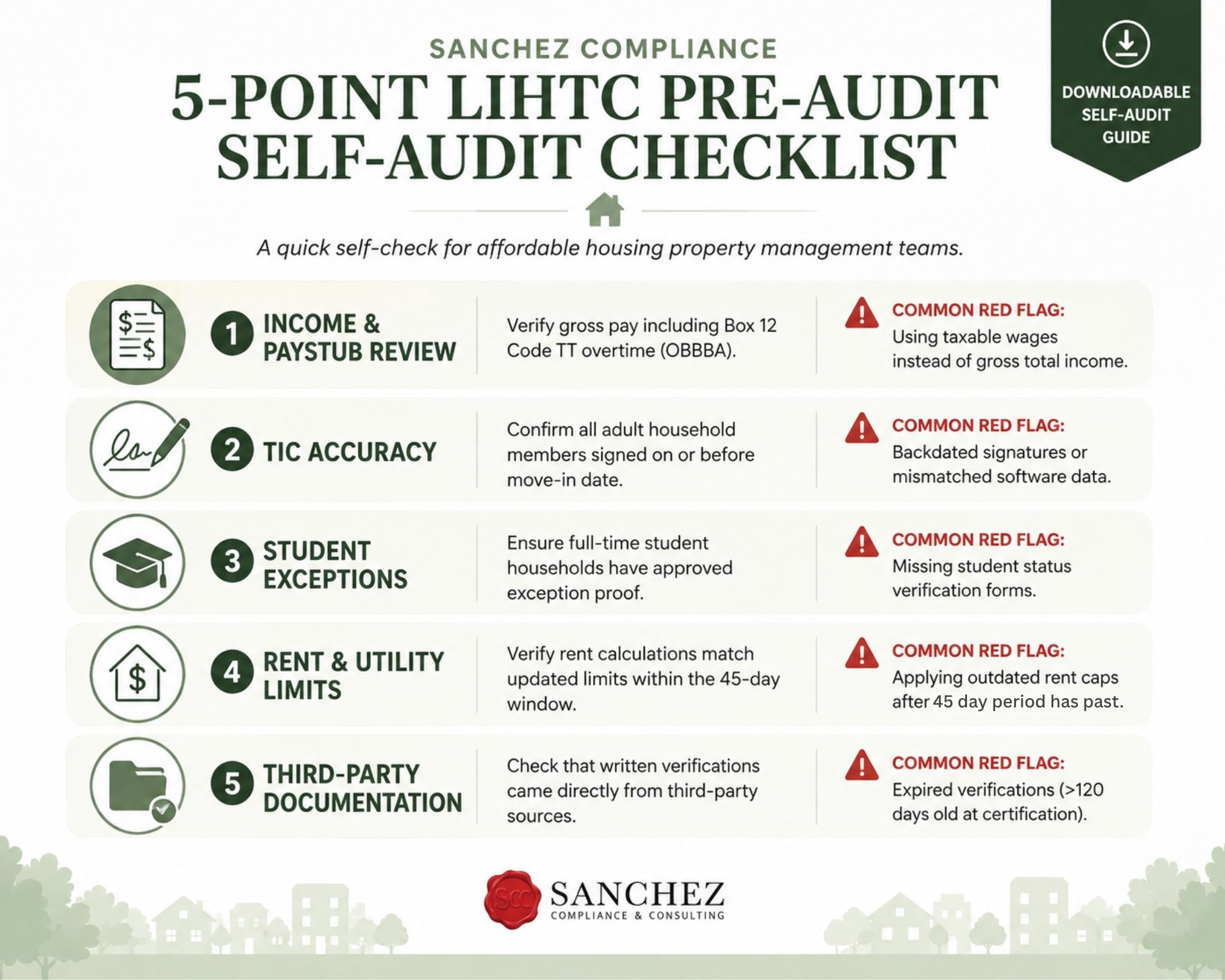
- Bonus: Pre-Audit 5-Point Self-Audit Checklist
- Conclusion & Next Steps
What Happens When State Auditors Flag a File Error
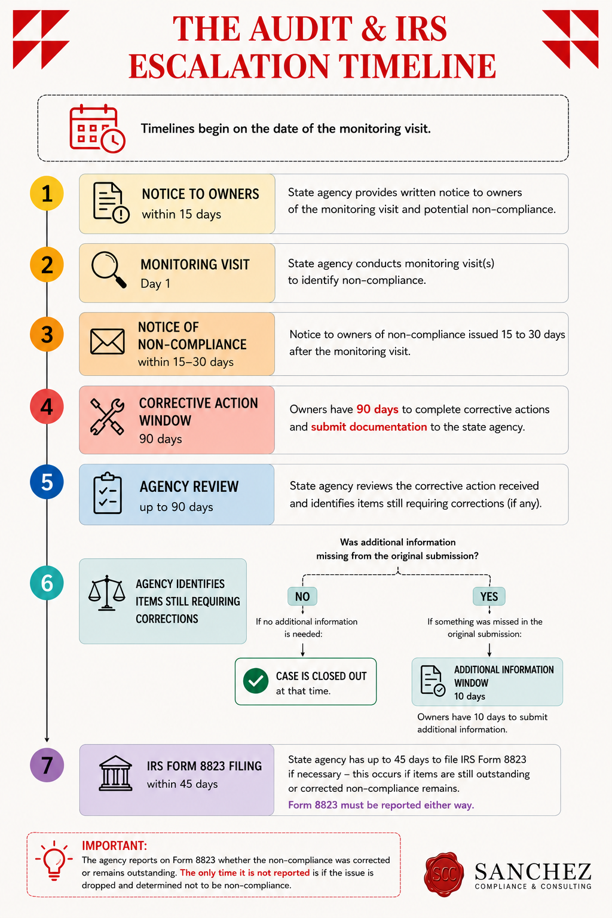
State agencies like the Texas Department of Housing and Community Affairs conduct onsite file reviews to confirm compliance with Section 42 of the Internal Revenue Code. When auditors find discrepancies, they document them and issue corrective action notices.
The real trouble starts when those findings escalate. The state agency files an IRS Form 8823, which reports noncompliance directly to the IRS. Once that form lands, property owners face potential tax credit recapture, strained investor relationships, and severe administrative burdens under tight correction deadlines.
Common LIHTC Audit Mistakes That Trip Up Property Managers
Knowing recurring audit patterns helps site teams catch problems long before state monitors arrive.
Income Calculation Errors & 2026 OBBBA Rules
Calculating household income seems straightforward until variable hours or new tax legislation come into play. A major trap for 2026 stems from payroll changes under the One Big Beautiful Bill Act (OBBBA). While employers now separate non-taxable overtime pay (often designated on paystubs or W-2s as Box 12 Code TT), tax credit compliance rules require gross income to be included. Counting only taxable gross wages undercalculates household income and instantly puts a file out of compliance.
Additionally, properties frequently miss the strict 45-day implementation window for annual income and rent limit updates following their May 1 release date. For a deeper breakdown on handling payroll nuances, see our guide on Proper 2026 LIHTC Income Calculation or explore how to apply 2026 Income Rent Limits.
Tenant Income Certification (TIC) Issues
Tenant Income Certifications must be executed cleanly. Common audit findings include missing signatures, incorrect effective dates, uncertified household members, or discrepancies between electronic software entries and physical paper files.
Student Status Verification Problems
Full-time student households are generally prohibited under Section 42 unless they satisfy specific statutory exceptions. Auditors closely check that full-time student verification forms and exception documentation—such as single parents receiving TANF/AFDC, joint tax filers, or former foster care youth—are fully documented prior to move-in.
Third-Party Verification Gaps
Relying on incomplete or outdated third-party verifications is an immediate red flag. Verifications must come directly from the source (e.g., employers, financial institutions) without tenant hand-delivery, and must fall within acceptable timeliness windows prior to certification.
Pre-Audit Preparation Strategies That Work
Audit readiness isn’t something you achieve once and forget. It requires ongoing effort and attention to detail.
But the payoff is huge. Properties that stay audit-ready avoid the panic when notification letters arrive.
Implement a Self-Audit Routine
Regular internal file reviews catch administrative oversight early. Quarterly sampling of active tenant files ensures high-risk items like assets and overtime calculations are verified correctly.
Use Standardized File Organization
Standardizing tenant file order across your entire portfolio speeds up monitoring visits and prevents misplaced verifications. Keep application forms, third-party verifications, income calculations, and TICs in dedicated, labeled sections.
Invest in Staff Education
Regulations change rapidly. Ensuring site personnel understand annual limit updates, state-specific forms, and shifting payroll rules eliminates mistakes at the point of leasing.
How Third-Party Compliance Support Reduces Risk
Balancing daily leasing operations with detailed compliance checks can overwhelm site staff. Partnering with external experts for pre-audit file reviews, first-year file approvals, and audit preparation provides an objective safety net. Learn more about evaluating operational overhead in our breakdown of 3rd Party vs. In-House LIHTC Compliance.
Building an Always Audit-Ready Culture
Audit readiness is an ongoing operational standard, not a last-minute scramble when a notice arrives. By maintaining clean file organization, verifying complex income sources accurately, and performing routine internal audits, property management teams can face state reviews with total confidence.
Bonus: Pre-Audit 5-Point Self-Audit Checklist
Conclusion & Next Steps
Preventing LIHTC audit mistakes comes down to consistent systems, continuous training, and expert oversight. If your property team is preparing for an upcoming state review or wants peace of mind on current files, Sanchez Compliance & Consulting is here to help.
Need expert file review support? Schedule an Audit Preparation Review with Jeanie Sanchez today to keep your properties fully compliant and audit-ready.